The Off-Site That Moves: A Ten-Station Team Challenge for Your Next Planning Day
Photo: Nicholas Mutton, CC BY-SA 2.0, via Wikimedia Commons
Away days are strange creatures. You gather a team in a hotel or a borrowed meeting room, feed them pastries, ask them to think strategically, and then watch the energy drain towards the door by 3pm. The intention is good. The format often isn't. So before you book another guest speaker or another trust-building exercise involving blindfolds, consider putting something physical on the agenda — something that gets people moving, talking and laughing without turning into a boot camp.
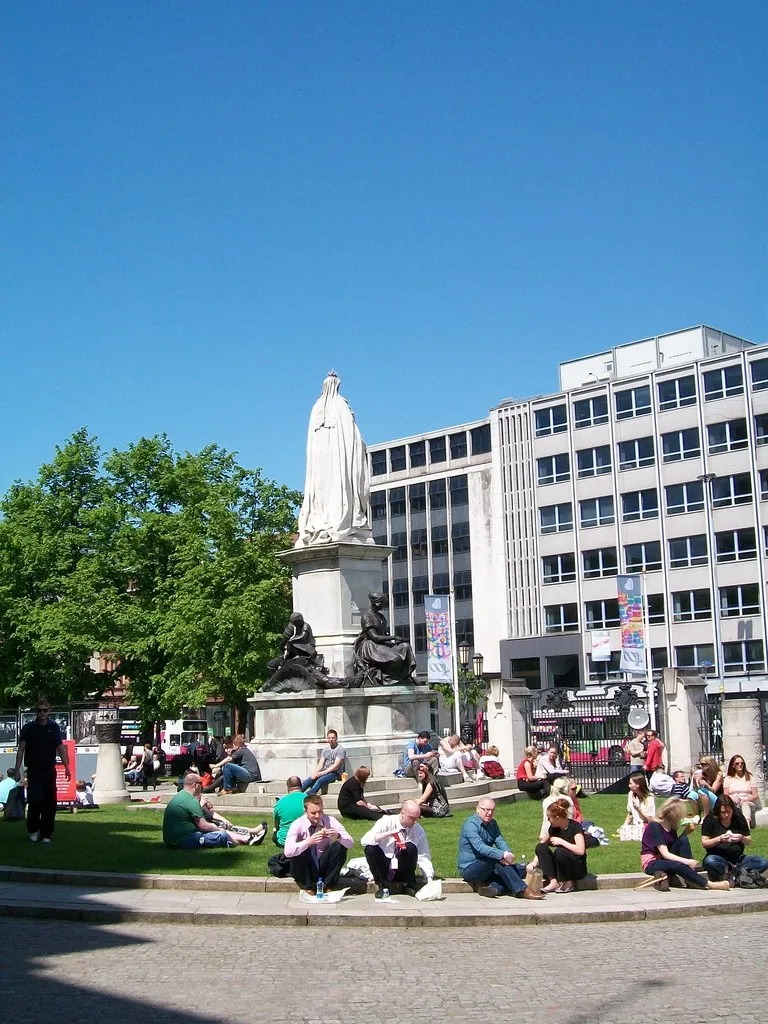
The idea is simple: a 90-minute, ten-station team challenge built from bodyweight moves, a set of stairs and whatever green space is within walking distance. No gym membership. No specialist kit. No leaderboard that makes half the room feel like they've already lost. Just a practical session that earns its place because it does something a slide deck can't: it changes the room's energy and gives people a shared story to take back to work.
Start with the agenda, not the burpees
This works best when it isn't bolted on as an afterthought. Give it a proper slot — mid-morning after coffee, or straight after lunch when the post-sandwich slump would otherwise hit. Ninety minutes is enough: ten minutes to brief and warm up, six to eight minutes per station with short transitions, and fifteen minutes to cool down, compare notes and get back into the room without feeling rushed.
Keep teams mixed. Mix departments, fitness levels and personalities. The point isn't to find the fittest person in finance. It's to give people a reason to communicate outside their usual channels. Score participation and teamwork rather than speed, or don't score at all. A simple card that teams tick off together is often enough.
Build ten stations from what's already there
You don't need a field of gym equipment. You need a staircase, a wall, a bench and a patch of park. Here's a workable ten-station circuit that can be set up in under half an hour:
- Stair laps — walk up, walk down, repeat. No racing.
- Wall sit — back against a wall, knees bent, hold for a comfortable count.
- Step-ups — use the bottom step or a low bench. Alternate legs.
- Park shuttle — walk or jog between two markers set 20 metres apart.
- Bench push-ups — hands on a bench or wall, the higher the easier.
- Sit-to-stand — from a bench or chair, stand and sit with control.
- Standing march — knees up, arms swinging, keeping it brisk but manageable.
- Calf raises — hold the back of a bench for balance if needed.
- Carry and chat — walk a short loop carrying a water bottle or small bag, swapping hands.
- Cool-down walk and talk — a gentle lap with a prompt card: one thing you're taking from the day.
Each station should have three clear levels posted on a card: steady, stronger and spicier. That way nobody has to guess what 'scaled' means, and nobody has to announce that they're taking the easier option. The instruction is simply: pick the level that lets you keep moving and still hold a conversation.
Inclusive by design, not by disclaimer
Inclusion isn't a paragraph at the bottom of the email. It's built into the setup. Make every station time-based rather than rep-based, so people can work at their own pace. Offer a seated or standing alternative for every movement. Make sure the route is step-free for anyone who needs it. And make opting out genuinely fine — some people will prefer to walk the route, keep score, or take photos. That's still participation.
Avoid language that turns it into a competition against each other. Phrases like 'beat your own best' and 'choose your level' work better than 'race the clock'. The goal is a team that finishes feeling more connected, not a team that finishes feeling assessed.
The British weather contingency
This is the UK, so assume the forecast will change its mind. Check the Met Office the day before and again on the morning. If it's merely grey, carry on — layers and a waterproof are part of the plan. If it's properly wet or windy, move the whole thing indoors: stairwell laps, corridor walks, wall sits and bench push-ups in a meeting room. It won't be glamorous, but it will still work. Have the indoor version mapped out in advance so nobody is standing around deciding what to do while the rain comes sideways.
For parks, check opening times and lighting. In winter, a well-lit route matters more than a scenic one. And if the ground is icy, switch the park shuttle to an indoor corridor route without apology.
A one-page risk assessment, not a red-tape epic
You don't need a binder. You need a sensible page that covers the basics: venue permission, route hazards, weather, first aid, emergency contact, accessibility, water, and a clear opt-out. Ask people to flag injuries or conditions in advance, and remind everyone that this is a participation challenge, not a medical test. Check whether your park or venue needs permission for organised group activity. Keep a basic first-aid kit on hand. Nominate one person to lead the briefing and one to sweep at the back.
That's it. The risk assessment should take twenty minutes, not two weeks. If it starts to feel like a compliance project, simplify the challenge rather than the safety.
Turn the one-off into a habit
The real win isn't the 90 minutes. It's what happens next. Use the away-day session as a launchpad for something smaller and recurring: a ten-minute Tuesday station in the stairwell, a monthly lunchtime park loop, or a walking one-to-one slot that replaces a meeting room catch-up. Rotate who leads it. Keep it optional. Don't turn it into a performance metric.
A team challenge works best when it feels like a normal part of how the team operates, not a special event that requires a committee. Start with the away day, then pick one small thing you can repeat without a booking form. That's how the energy boost becomes a habit — and how the agenda item earns its place for good.